A data center change needs a back-out
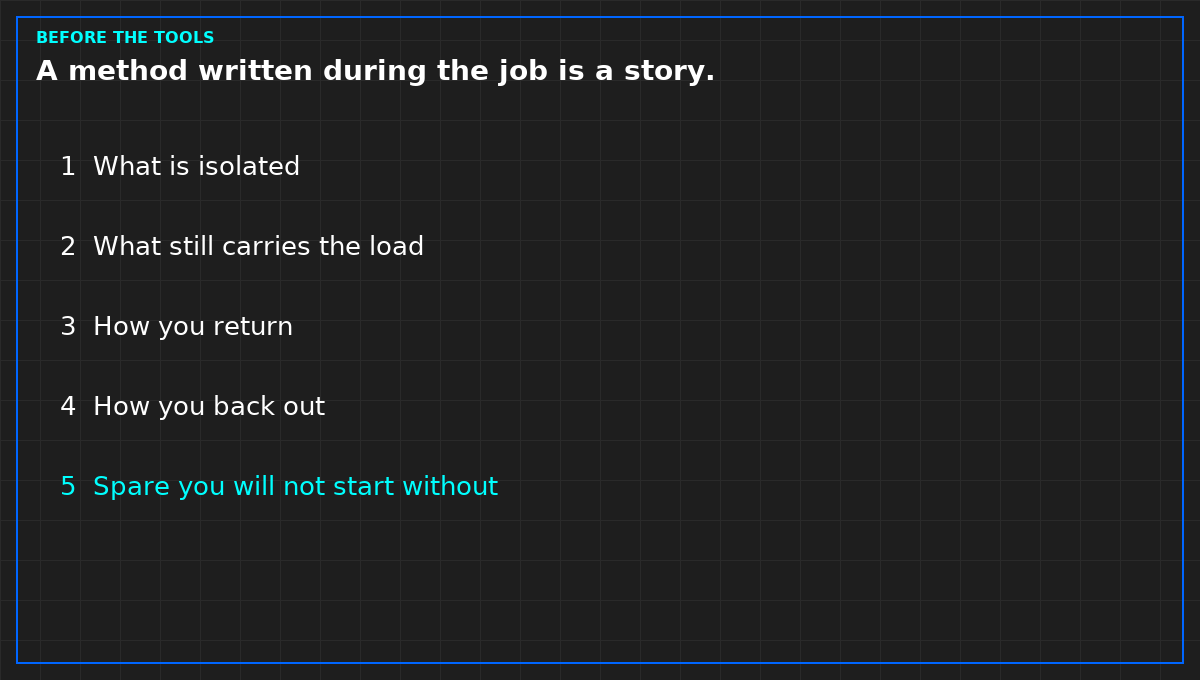
Original diagram. Not a site record.
Work that changes the plant is not a task on a list. It is a change with an old state, a new state, a person who accepted it, and a way back. If the way back is "call the vendor," write that. It is a limit. It is more honest than a blank.
The shift has to be able to see the abnormal state before the window starts. A change that lives only in a chat will be paged as a fault, and then argued as if nobody knew. Mark it where the people and the screen can both see it, or do not open the window.
A back-out that has never been read aloud is not a back-out. The person on the night has to be able to say the stop without opening a slide deck. If they cannot, the job waits. Speed is not a reason to skip the sentence.
Do not paste a customer's method statement into a public note. Their hazards stay in their file. Your record names the stop, the back-out, and whether the service was confirmed after, not merely that the alarm went quiet.
From Run the Data Center Day, Tristan, Data Center Field Guides. No store link until the Kindle edition is listed.
Related: Grouping alarms is not a cause.
Master the Complete Protocol: Design and Build a Liquid Load Bank for NVL72 Racks
A Field Guide to Interface Boundaries, P&ID Hydraulics, Thermal Envelopes, and Acceptance Sheets
Stop relying on contractor spreadsheets and vendor promises. This field guide provides the complete, auditable verification binder—including acceptance thresholds, physical equations, inspection checklists, and signed refusal templates.