A suggested tower setpoint is not a saved kilowatt
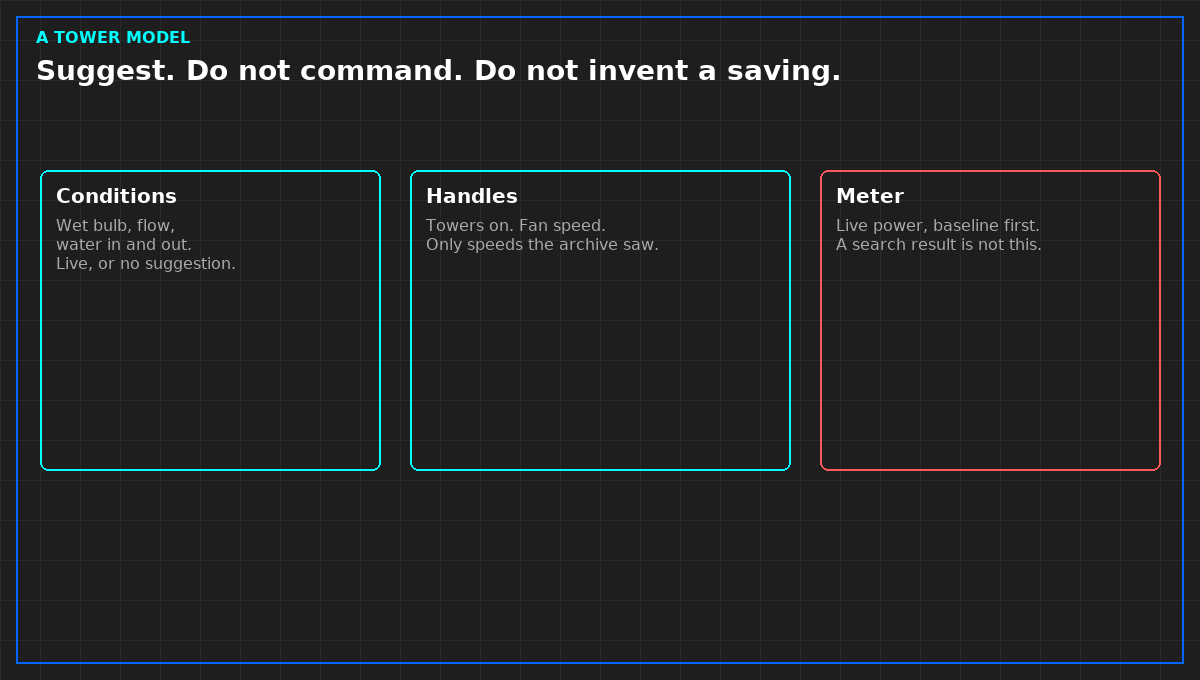
Original diagram. Not a site record. Not a control schematic.
The number at the bottom of a search is a hypothesis: if the conditions hold and the handles move as proposed, power might fall. It is not a measurement. It is not a percent you may put on a slide. A customer notice that says the plant was optimized is a pen. The model does not get one.
A saving, if you claim one, needs a baseline written before the trial: which meter, which clock, what else must stay still. Then a live power point, not stale, over an interval you hang on purpose. Weather has to be in the note, or a cooler hour will be called a smarter fan. IT load has to be in the note, or a lighter hall will be called a better tower. If those moved, you do not have a tower result. You have a different day.
One hour is not a season. Towers are weather machines. A trial in a mild week does not sign the year. Write the weeks. Refuse the annual sentence if the hot, humid interval is missing. That is the same rule as a corrosion coupon hung only in the quiet season.
The suggestion may sit on a screen labeled not for decisions. An unlabeled setpoint will be obeyed. If a control output is ever allowed to take the suggestion, that output is a change with a back-out, owned, written before the night, and outside this note. This note does not describe how to wire it. The sheet records whether any model output may command. The answer here is no, until a separate procedure says yes, by title, not by a pasted ladder.
From When a Monitor May Speak, Tristan, Data Center Field Guides. No store link until the Kindle edition is listed.
Related: Do not add nameplate and measured load.
Master the Complete Protocol: Design and Build a Liquid Load Bank for NVL72 Racks
A Field Guide to Interface Boundaries, P&ID Hydraulics, Thermal Envelopes, and Acceptance Sheets
Stop relying on contractor spreadsheets and vendor promises. This field guide provides the complete, auditable verification binder—including acceptance thresholds, physical equations, inspection checklists, and signed refusal templates.