What data center commissioning levels 0 to 6 sign
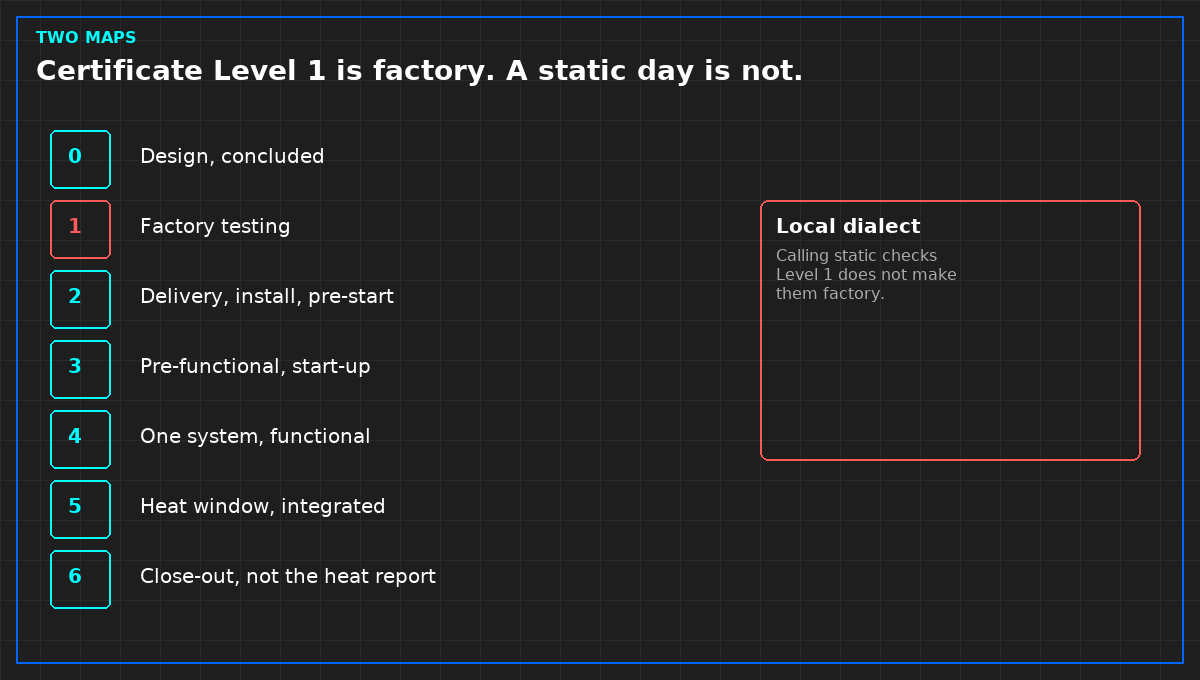
Original diagram. Not a site record.
People search for the seven levels and then file the wrong PDF in the slot. The certificate set is a map of what was concluded, not a mood.
Level 0 is design and planning, concluded. Level 1 is factory testing. Level 2 is delivery, installation, and pre-start. Level 3 is pre-functional checks and system start-up. Level 4 is functional testing of a system. Level 5 is integrated testing, more than one system. Level 6 is close-out and turnover. A heat-test report is not Level 6. Turnover is the later signature, after the punch on the levels you actually ran is closed, and after the map says which levels you did not run.
A finished hall often brings a second numbering. Its "Level 1" is static acceptance, no energy, because that was the first gate on site. That dialect can live in a procedure note. It must not be dropped into the factory certificate slot. Static work sits with pre-start, not with Level 1. One machine, if the script is a functional test, is Level 4 in the certificate pack. The heat window is Level 5. Close-out is Level 6, and only when the words on the page match the map.
A note that design and factory acceptance were left out is allowed. Silence is not a pass. If the map does not list a level as refused, the next reader will assume it was signed. Write the refusals on the first page.
Do not paste a certificate template into a public note. The titles are enough. Your file keeps the forms.
From Finish a Liquid Cooling Verification, Tristan, Data Center Field Guides. No store link until the Kindle edition is listed.
Related: Certificate Level 1 is not a static test.
Master the Complete Protocol: Design and Build a Liquid Load Bank for NVL72 Racks
A Field Guide to Interface Boundaries, P&ID Hydraulics, Thermal Envelopes, and Acceptance Sheets
Stop relying on contractor spreadsheets and vendor promises. This field guide provides the complete, auditable verification binder—including acceptance thresholds, physical equations, inspection checklists, and signed refusal templates.