SOP, MOP, and EOP are three papers
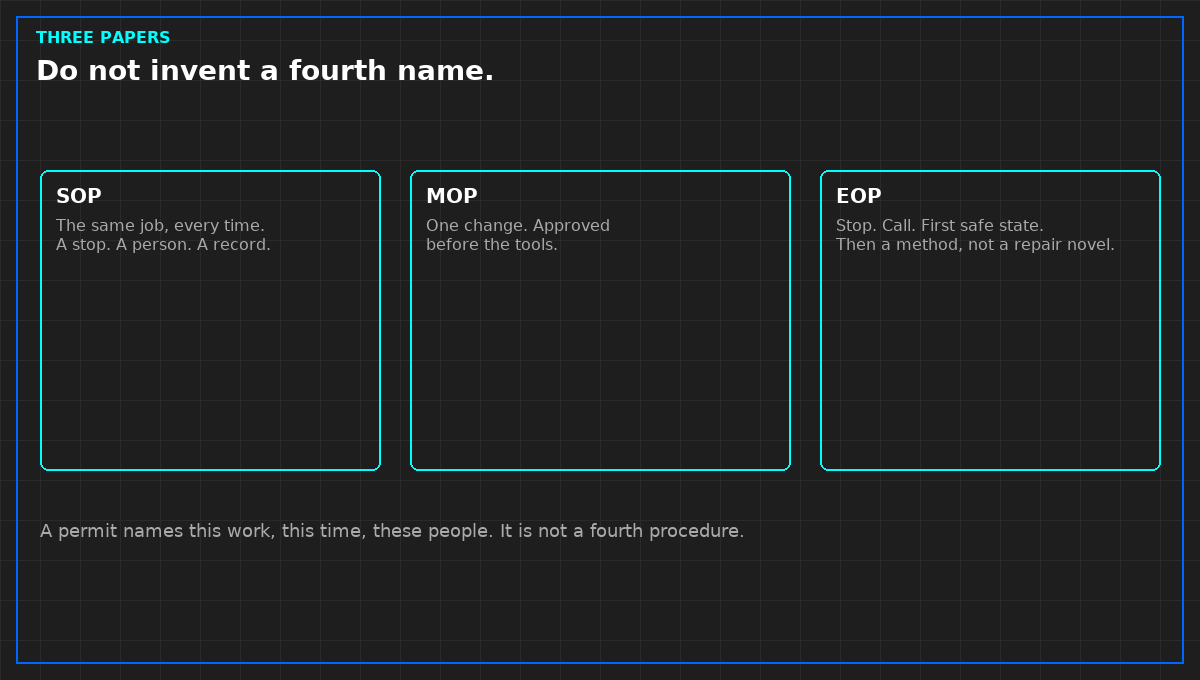
Original diagram. Not a site record.
Three names are enough. A standing operating procedure is how a routine task is done every time. A method of procedure is the paper for one job, on one day, that changes the plant. An emergency operating procedure is what you do when you cannot wait for that job paper. A permit sits on top of all three. It is not a fourth procedure. It says this work, this place, this time, these people.
Teams get into trouble by using one word for all three. A binder labeled SOP that contains a valve replacement, a daily round, and a twenty-page repair is not a system. It is a pile. The night shift will open the wrong one, or will not open any of them.
The test is the clock. If the work happens the same way every Tuesday, it is standing. If it isolates something and has to come back, it is a method, approved before the tools come out. If the service or a person is already in danger, it is the emergency paper, and it stops at the first safe state. After that, the rest of the work becomes a method. It does not stay inside the emergency paper because someone is still awake.
Do not invent a certified fourth name to sound like a course. Courses that teach how to write these papers may be cited by title. Their handouts are not your steps. A customer's procedure stays in their file. Yours names the stop, the person, and the record your plant actually uses.
If the only copy is a habit, write it down or stop calling it a procedure. A paper no one can find at the panel is the same as a habit.
From Run the Data Center Day, Tristan, Data Center Field Guides. No store link until the Kindle edition is listed.
Related: What an SOP is allowed to contain.
Master the Complete Protocol: Design and Build a Liquid Load Bank for NVL72 Racks
A Field Guide to Interface Boundaries, P&ID Hydraulics, Thermal Envelopes, and Acceptance Sheets
Stop relying on contractor spreadsheets and vendor promises. This field guide provides the complete, auditable verification binder—including acceptance thresholds, physical equations, inspection checklists, and signed refusal templates.